
Car & driving · Free
P0401: exhaust gas recirculation (EGR) flow insufficient
P0401 means the engine computer asked the EGR system to return exhaust gas to the intake, but too little arrived. On most cars, soot and carbon deposits in the EGR valve or its passages are to blame. Diesels and cars that do many short trips are especially prone to it.
- No account
- Runs on your device
- Phone & desktop
Check your car for P0401
Runs on your device
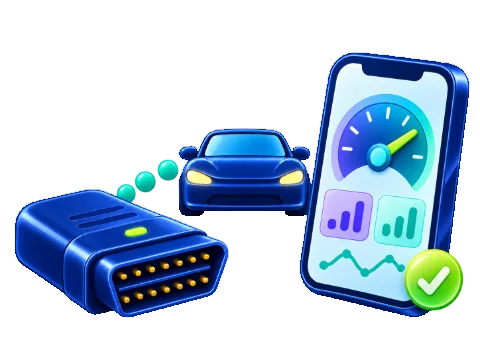
Connect your OBD2 adapter
- Plug the adapter into the OBD2 port – usually under the steering wheel, near the pedals.
- Switch the ignition on, or start the engine.
- Bluetooth adapter? Turn Bluetooth on. Nothing else to set up.
This browser cannot talk to OBD adapters. Use Chrome or Edge on Android, Windows or Mac – on iPhone, the free Bluefy browser works with Bluetooth LE adapters. The demo car works everywhere.
Wi-Fi adapters cannot work in a browser; Bluetooth LE, classic Bluetooth (on a computer) and USB adapters can.
Your car data stays on your device. The page talks to the adapter directly; codes, VIN and values are never uploaded.
Never use it while you drive. Set things up before you set off, or let a passenger handle the phone. Standard OBD2 reads engine and emissions data; ABS, airbag and coding need workshop equipment.
What P0401 means
The exhaust gas recirculation system (EGR) leads a small amount of exhaust back into the intake. This lowers the combustion temperature and with it the nitrogen oxides (NOx) the engine produces. The EGR valve controls the flow, and the engine computer checks the result, depending on the car through a position sensor, a pressure change in the intake manifold or a temperature sensor.
When the valve opens and the computer sees less effect than expected, it stores P0401. Since exhaust gas carries soot and oil vapor, the valve and the narrow passages behind it coke up over time.
Symptoms of P0401
- Often no noticeable change in driving.
- Pinging or knocking from a petrol engine under load, because combustion runs hotter.
- Higher NOx emissions and a failed emissions test.
- Reduced power or limp mode on some diesels.
Causes of P0401, cheapest first
Work down the list in order: the first checks cost little or nothing, the last ones are jobs for a workshop.
Carbon in the EGR passages
The ducts between exhaust, valve and intake clog up gradually. Cleaning them is often the real fix; a new valve on a blocked passage brings the code back.
A sticking or dirty EGR valve
Deposits stop the valve from opening fully. On many cars it can be removed and cleaned; if its motor or position sensor has failed, it needs replacing.
Vacuum hoses or the control solenoid
On older vacuum-operated valves, a cracked hose or a faulty solenoid means the valve never gets the signal to open. Check the hoses for cracks.
A faulty EGR sensor
A position or pressure sensor that reports wrong values makes a working valve look blocked.
A blocked EGR cooler (diesel)
Many diesels cool the returned exhaust gas. A cooler clogged with soot restricts the flow; it can also leak coolant, so keep an eye on the coolant level.
Can you drive with P0401?
Usually safe to drive. Most cars drive normally with P0401. Avoid heavy load if a petrol engine starts to knock, and have the fault fixed before the next emissions inspection. On a diesel in limp mode, drive gently to a workshop.
Check P0401 with OBD Studio
Connect your adapter above, or try the demo car, then:
- In Live data, show EGR commanded and EGR error (on cars that report them). A large error while the valve is commanded open confirms the low flow.
- Graph Intake manifold pressure: on many petrol engines it rises slightly when the EGR opens. No change at all suggests a blocked valve or passage.
- The freeze frame in Fault codes shows the speed and load at which the test failed, often steady cruising or coasting.
- In Inspection, the EGR / variable valve timing monitor turns Complete once the car has tested the system again after a repair.
More fault code guides
Each of these codes has its own page with causes ranked by cost and the checks that go with them.
- P0420Catalyst efficiency below threshold
- P0171System too lean
- P0300Random or multiple misfire
- P0455EVAP system large leak
- P0442EVAP system small leak
- P0128Engine warms up too slowly
- P0172System too rich
- P0101Air flow sensor implausible
- P0135Front O2 sensor heater
- P0016Crankshaft and camshaft out of step
- P0011Intake camshaft timing over-advanced
- P0141Rear O2 sensor heater
- P0113Intake air temperature sensor high
- P0457Fuel cap loose or missing
- P0299Turbo underboost
- P0700Transmission control system fault
- P0087Fuel rail pressure too low
- P0562System voltage low
- U0100Lost communication with engine computer
More OBD Studio pages
Frequently asked questions
Can I clean the EGR valve myself?
On many cars, yes: the valve is held by a few bolts and can be cleaned with a carbon cleaner and a soft brush. Fit a new gasket when you put it back, and clean the passages too if you can reach them.
Is P0401 serious?
Not immediately. It mainly raises emissions. On petrol engines, heavy knocking under load can harm the engine over time, and on diesels limp mode costs power, so plan the repair rather than ignoring it.
Why does P0401 come back after cleaning?
Usually because the passages behind the valve are still blocked, or because the EGR cooler or a sensor is the real cause. Check the EGR values in live data after the repair before you call it done.
Can I read P0401 without going to a workshop?
Yes. With any ELM327-compatible Bluetooth LE or USB adapter, OBD Studio on this page reads P0401 and every other stored code for free, shows the freeze frame and clears the code after the repair. Nothing to install, no account.

