The first checks, in pictures
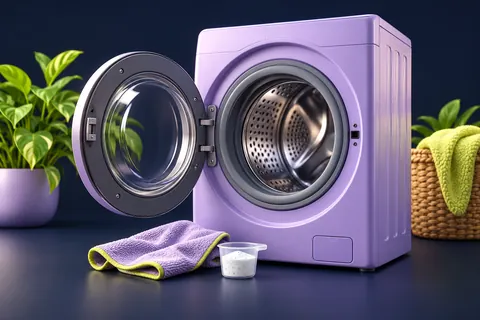
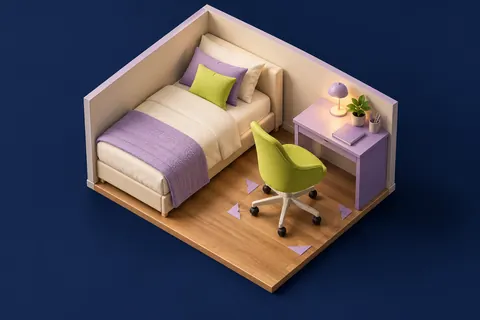
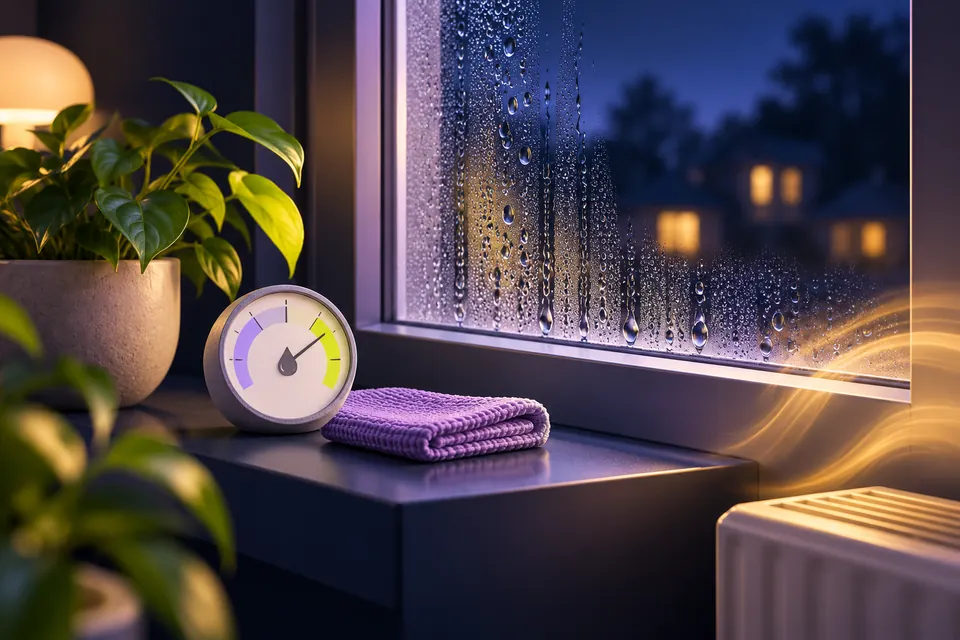
Start with these three checks. The pictures are simplified; the steps below explain the details.
Note where water appears
Room-side water differs from moisture between panes or a leak.
See this step — Note where water appearsMeasure room conditions
Record air temperature and humidity. Surface temperature helps too.
See this step — Measure room conditionsCompare, then act
Use the dew point result to guide moisture and ventilation checks.
See this step — Compare, then act
You wipe the window every morning and it is wet again the next day. The useful question is not which cloth absorbs best. It is where the moisture comes from and why that particular surface becomes cold enough for water to collect. A basic humidity reading and a few observations can help you distinguish everyday condensation from a leak or a glazing problem. This guide starts with checks that do not require altering the building. It also explains when to involve the property owner or a qualified professional. A calculator can explain the conditions for condensation; it cannot diagnose mould or certify that a room is healthy.
The first useful check
Locate the water first: on the room-side glass, outside, between panes or around a leak. Dry wet surfaces, note room humidity and recent moisture-producing activities, and investigate recurring damp rather than only wiping it away.
Which situation sounds like yours?
Water on the room-side glass
Compare humidity, cold surfaces and moisture-producing activities.
Fog between sealed panes
Ask a glazing professional about the unit.
Wet patch follows rain or a pipe
Investigate a possible leak through the responsible person.
Damp or mould keeps returning
Record the pattern and seek property-specific help.
Step 01
Locate the moisture before choosing a fix
Look closely at which surface is wet. Water on the inside face of the glass is a different observation from fog trapped between panes. Check whether the frame or nearby wall is also wet, whether the problem follows rain and whether a pipe or roof area is involved. Photograph the location and date if you need to report it. Do not label every damp mark as ordinary window condensation.
Dry accessible wet surfaces promptly with an appropriate cloth and protect nearby belongings. If you see recurring damp, damaged materials or visible mould, deal with the source rather than painting over the symptom. For a rented property, report the observations to the responsible person. Avoid dismantling glazing or sealing ventilation openings as an experiment; those changes can create additional problems.
Step 02
Understand the cold-surface effect
Air can reach saturation when it cools against a colder surface. The temperature at which this happens is the dew point. A window can therefore collect water even when the room itself feels comfortable. The National Weather Service explains dew point as the temperature to which air must cool, at constant pressure, to reach saturation. The relevant comparison is between the air's dew point and the surface temperature.
This explains a common surprise: turning up the heat may change the relative-humidity reading without removing the water vapour that cooking, showers or indoor drying added. Surface temperature, ventilation and moisture production all matter. A simple calculation is an illustration of that relationship, not a building survey. Measurement error and conditions right beside a window can differ from a sensor in the middle of the room.
Try Dew Point Studio
Use your room temperature and humidity to calculate an approximate dew point. Add a measured surface temperature if you have one. The result explains the physics; it is not a mould or building diagnosis.
Open the free dew point calculatorStep 03
Keep a small observation record
If you have a room thermometer and humidity meter, place them according to their instructions, away from a direct heat source or splash. Note the room reading, time and whether the window is wet. Take observations at comparable times, such as before breakfast and later in the day. You do not need to buy an expensive monitoring system to begin with a written record.
Add what happened beforehand: showering, cooking, drying clothes indoors, several people sleeping in the room or a change in weather. These observations do not prove a cause by themselves, but they help you choose one reasonable adjustment. Avoid checking only on an unusually dry afternoon and concluding that a recurring morning problem has disappeared. The conditions when the water forms are the conditions worth understanding.
Step 04
Reduce the moisture source you can identify
Use the building's intended ventilation when cooking or bathing, and check that an accessible extractor is being used as its instructions describe. EPA guidance identifies these activities and indoor clothes drying as potential moisture sources. If ventilation appears faulty, arrange a repair rather than covering the opening. Keep safety and the building's design in mind when deciding how to ventilate in cold or wet weather.
Choose one feasible change and record it. For example, compare mornings after laundry was dried elsewhere with mornings after it was dried in that room, while noting that outdoor conditions may also differ. Do not claim that a single comparison proves the whole cause. The purpose is to see whether the adjustment is worth maintaining and whether further investigation is needed.
Step 05
Know what a humidity number can and cannot tell you
EPA's general moisture guidance recommends keeping indoor relative humidity below 60 percent where possible, ideally between 30 and 50 percent. That is broad guidance, not a guarantee against condensation in every climate or building. Very cold glass may still collect water at a room reading that looks moderate. A local surface measurement and the building's ventilation conditions can change the interpretation.
Do not chase an extremely low number simply to make a window dry. If the room feels uncomfortable or the problem persists despite reasonable moisture control, seek advice suited to the property and climate. A portable dehumidifier may help in some circumstances, but it does not repair a leak or failed ventilation. Measure and identify the problem before buying equipment based only on a dramatic online before-and-after photo.
Step 06
Escalate recurring damp with a useful record
Report where the moisture appears, when it appears, whether it follows rain and what ordinary ventilation measures you have tried. Include dated photographs and room readings if you have them. Avoid asserting a structural diagnosis from a calculator. A professional may need to inspect leaks, glazing, insulation or ventilation. The record helps them understand the pattern without making you responsible for identifying every technical cause.
If mould is present, consult appropriate guidance for the extent and material involved. Do not scrape or disturb extensive affected areas as a routine cleaning experiment. People with health concerns should seek appropriate medical advice. Once repairs or changes are made, revisit the same observation points. A dry window on one day is encouraging; a sustained improvement under comparable conditions is more informative.
An example you can follow
The towel was solving only the visible symptom
Illustrative example: Pat wipes a bedroom window every morning. A short record shows that the wettest mornings follow evenings when laundry dries in the room with the intended ventilation unused. Pat changes that routine where practical and records the next mornings, including the weather. The glass becomes less wet, but a separate damp patch still follows rain. Pat reports that patch rather than treating it as the same problem. The useful insight is that one room can have more than one moisture source; a successful habit change does not rule out a leak.
Three-day moisture record
Use comparable times and note the weather. A record suggests patterns; it does not establish a structural diagnosis.
| Observation | Morning | Later in the day |
|---|---|---|
| Room temperature / humidity | Write measured values | Write measured values |
| Where water appears | Glass, frame, wall or between panes | Same location? |
| Recent activity | Shower, cooking, laundry, occupancy | What changed? |
| Weather / rain | Record the conditions | Record the conditions |
| Action tried | One practical adjustment | Result and remaining issue |
Questions you might still have
Will a dehumidifier fix every wet window?
No. It may reduce airborne moisture, but it does not repair a leak, glazing fault or ventilation defect. Identify the location and pattern first.
Does a normal room humidity reading rule out condensation?
No. A sufficiently cold surface can still be below the air's dew point. A room sensor also may not reflect conditions right next to the glass.
Can I cover an air vent to keep the room warmer?
Do not block the building's intended ventilation as a condensation fix. If ventilation is inadequate or uncomfortable, seek advice about the system rather than disabling it.
Sources & how this guide was made
Written by LoschaZ from the guidance below. The illustration is our own. Worked scenarios are labelled as illustrations; they are not customer stories or tests on every device. For product-specific steps, follow the current instructions for your device, account or item.