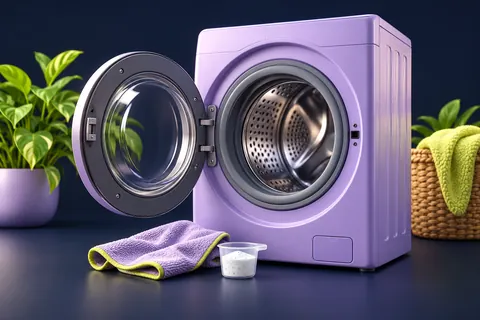
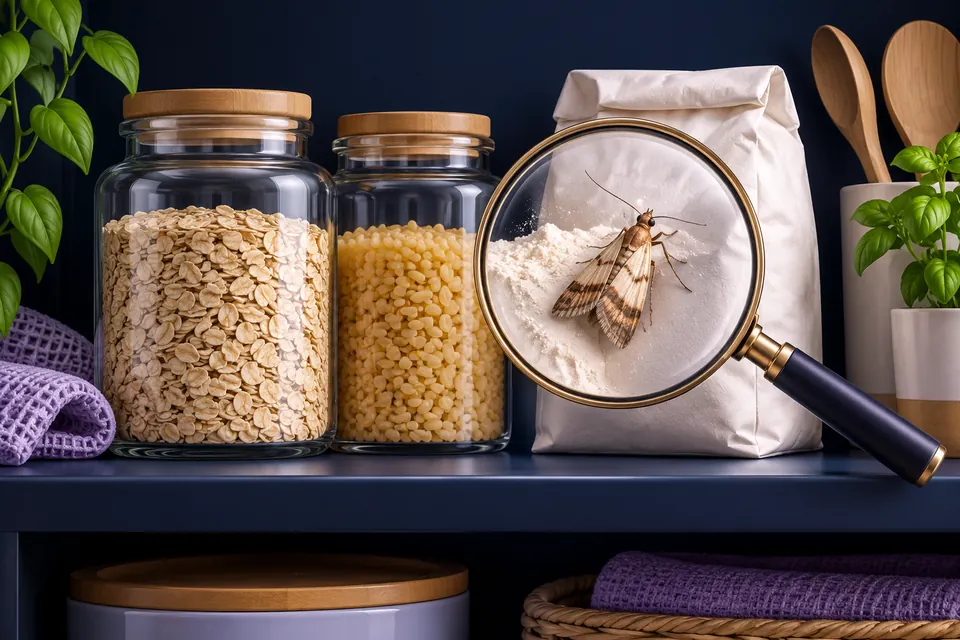
The first checks, in pictures
Start with these three checks. The pictures are simplified; the steps below explain the details.
Find the food source
Inspect opened and unopened dry-food packages nearby.
See this step — Find the food sourceRemove affected food
Bag infested items and remove them from the home.
See this step — Remove affected foodClean and protect storage
Clean cracks and store unaffected food in suitable sealed containers.
See this step — Clean and protect storage
You catch a moth in the kitchen, clean the obvious flour bag and see another one a few days later. The missing step is often a complete search for the food source. Dry pet food, an old bag of nuts or a rarely used ingredient can sit outside the cupboard you first inspected. A trap or a tidy shelf does not prove that the source is gone. This guide uses a simple shelf map to make the search systematic, then separates cleanup from monitoring. You do not need a collection of scented remedies or sprays to begin. First establish that the insects are associated with stored food and inspect the places you actually keep it.
The first useful check
Inspect all dry-food storage, including pet food and rarely used packets. Remove confirmed infested food, clean the storage area and monitor dated sightings. Do not spray insecticide into food cupboards as a substitute for finding the source.
Which situation sounds like yours?
Insects are directly associated with a food packet
Contain and remove the confirmed source, then inspect nearby stores.
Only a flying moth has been seen
Identify it and inspect stored food before choosing treatment.
The kitchen was checked but sightings continue
Include pet food, bird seed and rarely used storage locations.
New infestation evidence persists
Seek identification and professional advice with your record.
Step 01
Check that you are looking at the right pest
A small moth in a house is not automatically a pantry moth. Look for an association with stored food and seek identification help from a reputable extension service or pest professional if uncertain. A clear photograph and the location where you found it are useful. Do not assume that a moth near a bedroom requires the same treatment as insects found in a bag of cereal.
Write down the first location and date. If you have noticed larvae, webbing or insects in a packet, record that packet separately from a flying moth seen across the room. Those are different observations. Keep the identification stage calm and factual; a frightening image search can encourage unnecessary treatment before you know what you are dealing with.
Step 02
Draw a map of every food-storage location
List cupboards, drawers, spare shelves and any place where dry pet food or bird seed is kept. Include the bag behind the main bag, the baking box used only on holidays and the snack drawer outside the kitchen. Number the locations on a piece of paper. The cheap but useful trick is to track where you have actually checked, instead of repeatedly cleaning the most visible shelf.
Work through one location at a time. Use a clear surface so you can inspect packets without mixing checked items with unchecked ones. Mark each location as not checked, checked with no finding, or source found. The map is not a scientific pest count; it is a way to avoid leaving one forgotten food store untouched while buying more products for the rest of the room.
Step 03
Inspect packets, including the ones that look closed
University extension guidance lists many possible stored-food sources, including grains, nuts, dried fruit and pet food. Inspect packaging and contents as appropriate, looking for the evidence described by the identification source. Do not restrict the search to flour. A packet that looks closed from the front still deserves inspection if it belongs to the affected storage area.
Remove confirmed infested food from household storage in a contained way and dispose of it appropriately. Do not sift out visible insects and assume that the remaining food is suitable. For an uncertain item, isolate it from checked food while you seek reliable advice. Keep product and batch details if you intend to raise a concern with a retailer, but avoid keeping an infested packet loose in the kitchen for that purpose.
Step 04
Clean the area after removing the source
Clean shelves, corners and accessible cracks according to the surface's care requirements. Vacuuming and removing spilled food are part of extension guidance. Dispose of the collected debris appropriately so it is not left beside the cupboard. Let cleaned surfaces dry before returning food. Use normal food-area cleaning practices rather than combining chemicals or applying an unlabelled household mixture.
The University of Minnesota advises against insecticides for stored-food cupboards: they do not solve insects inside packages, and contamination creates another problem. That is why source removal comes first. If a professional treatment is needed, ask for instructions that protect food, utensils, children and pets. Do not improvise a pesticide application from advice intended for outdoor insects.
Step 05
Return food in a way you can inspect
Put checked food into suitable tightly sealed containers where appropriate and keep enough product information to identify its contents and storage requirements. Label the date you inspected it. Avoid pouring a new packet into an old container without first checking the remaining contents. A clear container is useful because you can inspect it; it is not a guarantee that every item placed inside was pest-free.
Arrange food so older items remain visible and rarely used ingredients do not disappear behind a wall of new purchases. You can use containers you already own if they are food-safe and close properly. The aim is not an expensive matching pantry display. It is a layout in which a future inspection takes minutes and the source of a problem is easier to locate.
Step 06
Monitor the trend, then reassess if necessary
Record new sightings with dates and locations. Extension guidance notes that adult moths can still appear for a period after an infested source has been removed, so one sighting does not by itself prove that every cleaning step failed. Equally, repeated new evidence in food means you should revisit the search. Use the record to distinguish a reducing pattern from an ongoing source.
If the infestation persists, request identification and control advice from a qualified service. Show the storage map, packets found and dated sightings. If you use a monitoring product, follow its label and understand what it measures; a trap is not a complete inventory of what remains inside food. Stop replacing remedies at random and return to the evidence: where is the food source, and has every relevant location been checked?
An example you can follow
The forgotten pet-food cupboard
Illustrative example: Casey empties the baking shelf twice, yet moths continue appearing. A storage map includes a utility-room cupboard that was missing from the earlier cleanups. An old dry-pet-food packet there contains visible infestation. Casey removes it, cleans the location and records later sightings instead of immediately buying another spray. The improvement comes from extending the search boundary. A kitchen problem can originate in a food-storage location that is not in the kitchen at all.
Shelf-by-shelf source map
Copy these headings onto paper. Mark every location once and keep confirmed findings separate from guesses.
| Location | Inspection status | Finding / date |
|---|---|---|
| Main food cupboard | Not checked / checked | Packet or none found |
| Baking supplies | Not checked / checked | Packet or none found |
| Snacks / nuts / dried fruit | Not checked / checked | Packet or none found |
| Pet food / bird seed | Not checked / checked | Packet or none found |
| Spare or seasonal storage | Not checked / checked | Packet or none found |
Questions you might still have
Why do I still see a moth after cleaning?
An adult can appear after a source has been removed, but a missed source is also possible. Use dated observations and reinspect relevant storage rather than judging from one sighting.
Will a trap solve the whole problem?
A monitoring product does not replace locating and removing infested food. Follow its label and use it as one observation, not proof that every packet is clear.
Should I spray the cupboard?
University of Minnesota guidance advises against insecticides in stored-food cupboards. Source removal and appropriate cleaning are the starting points.
Sources & how this guide was made
Written by LoschaZ from the guidance below. The illustration is our own. Worked scenarios are labelled as illustrations; they are not customer stories or tests on every device. For product-specific steps, follow the current instructions for your device, account or item.