
Everyday helpers · Free
What is my face shape? Find out with four measurements
Four measurements with a ruler or tape measure answer the question “what is my face shape?”. Enter them here, or add a selfie and let the AI measure for you. Free, private and right in your browser.
- No account
- Runs on your device
- Phone & desktop
Measure your face shape
Stays on your device
Enter your measurements
Use a mirror and a ruler held flat, or a printed front photo. Measure straight across, not around the curve of your face.
- Forehead
- Cheekbones
- Jawline
- Face length
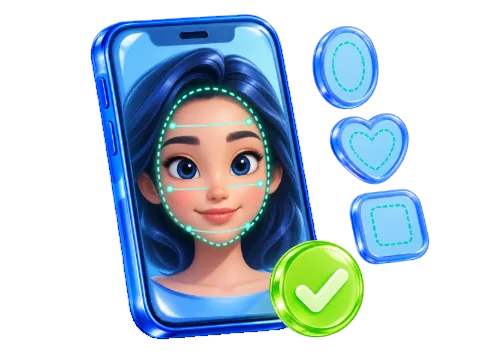
The colored lines show where to measure. Hold the ruler level and read it with your head straight.
Or measure a photo
JPG, PNG or WebP · drop it here or press Ctrl+V · HEIC only where your browser opens it
For a reliable result
- Camera at eye level, about an arm’s length away
- Hair back, so forehead and jaw are visible
- No glasses, a relaxed face, looking straight ahead
- Even light from the front, no strong shadows
Your photo never leaves this device. The face model (about 18 MB) loads from this website when you add a photo.
Your face shape
- Forehead
- Cheekbones
- Jawline
- Face length
The model ends on the upper forehead, so the hairline is estimated. Drag the dashed line on the photo or use the slider until it sits where your forehead meets your hair.
Not quite on the edge of your face? Drag the colored dots to your forehead, cheekbones, jaw corners and chin, or focus one and use the arrow keys. Everything updates at once.
Try glasses on your photo
The frames are drawn on your photo at the size of your face, so you can compare shapes. Frames marked “Suits you” are the ones suggested for your face shape.
All seven shapes
How close your measurements are to each shape. Many faces sit between two shapes.
Your measurements
| Measurement | Value | In plain words |
|---|
Ideas for your face shape
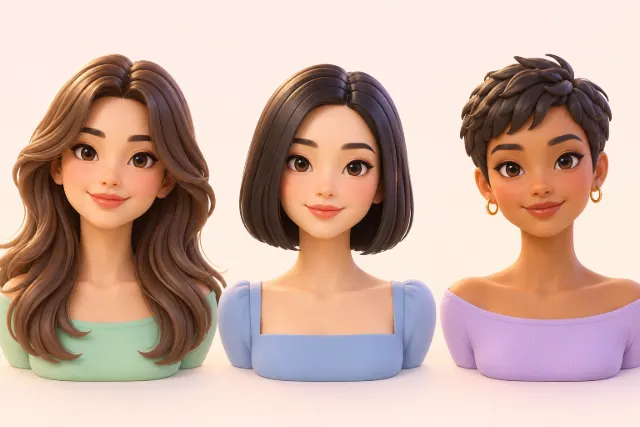
Balanced proportions let most cuts work. Keep the face visible.
Long hair
- Long layers
- Sleek, straight lengths
Medium hair
- A shoulder-length lob
- A chin-length bob
Short hair
- A pixie cut
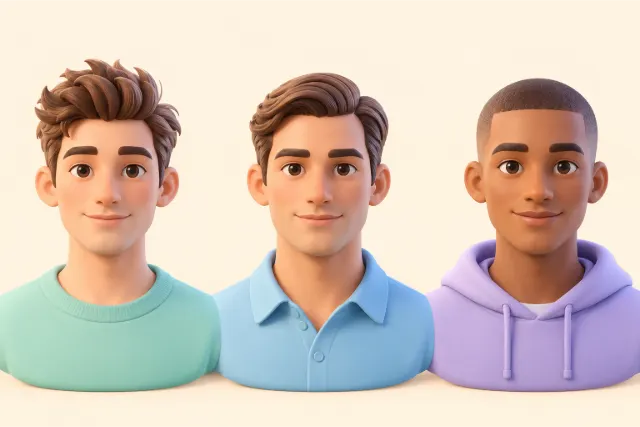
Shorter men’s cuts
- Textured quiff
- Classic side part
- Buzz cut
Better avoided: heavy bangs or curtains of hair that hide the face.
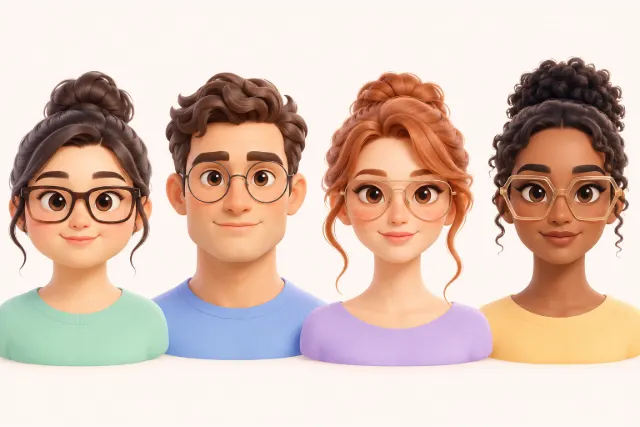
Frames as wide as your cheekbones, or a little wider, keep the balance.
- Rectangular frames add a little structure.
- Geometric frames give a soft face a clear line.
Less flattering: frames much narrower than your face.
Most beard styles suit an oval face.
- Keep the length even on the cheeks and chin
- Light stubble, a short boxed beard or a full beard all work
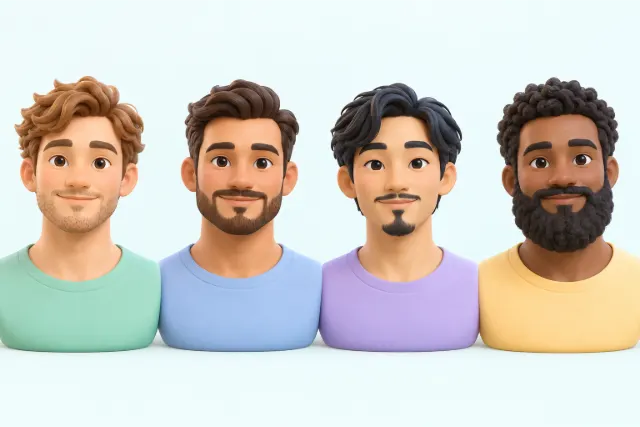
Add height and length so the face looks longer.
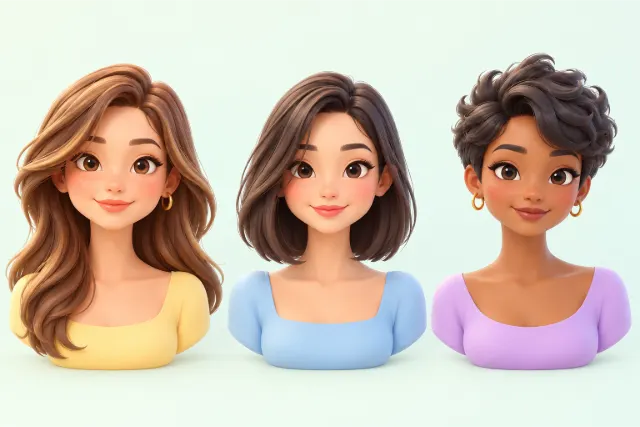
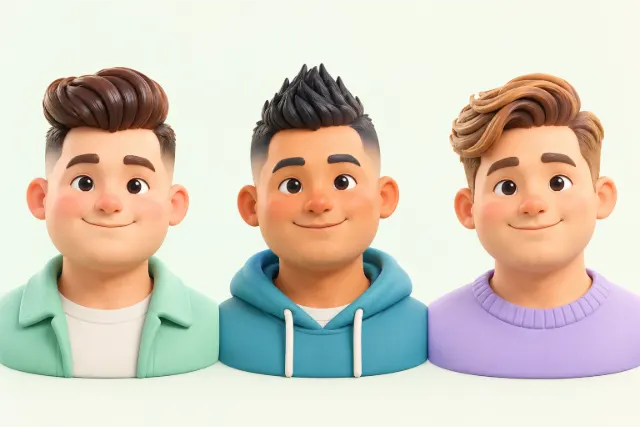
Long hair
- Long layers
- A deep side part with side-swept bangs
Medium hair
- A long bob that ends below the chin
Short hair
- A pixie with volume on top
Shorter men’s cuts
- Pompadour with shorter sides
- Quiff
- Faux hawk
Better avoided: chin-length rounded bobs and a blunt full fringe.
Angular frames add definition to soft curves.
- Rectangular frames straight lines balance round cheeks.
- Square frames clear corners add structure.
Less flattering: small round frames.
A beard can make a round face look longer.
- Keep it longer at the chin
- Keep the cheeks short and neat
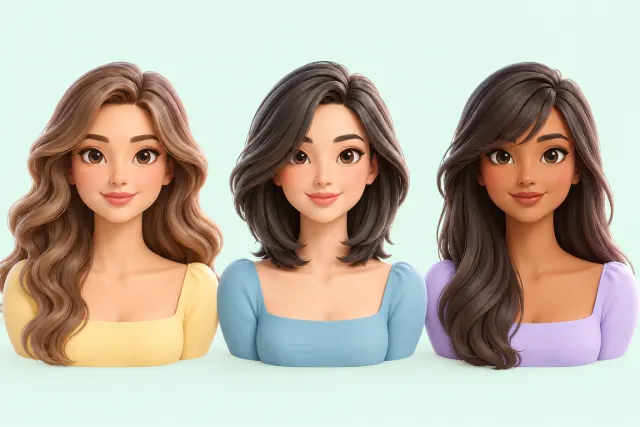
Soften the strong jaw with movement and layers.
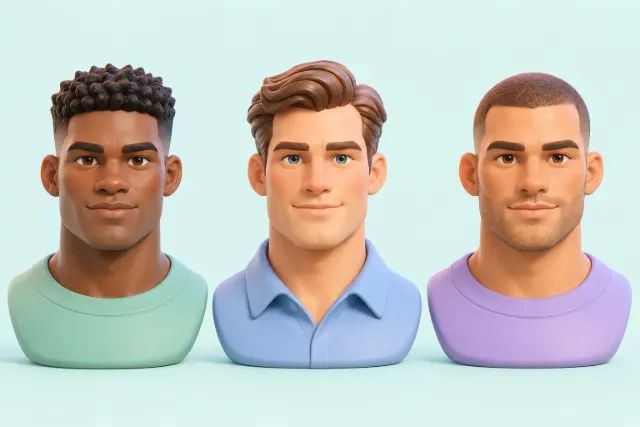
Long hair
- Soft waves
- Long layers with side-swept bangs
Medium hair
- A layered long bob with a side part
Short hair
- A soft, textured pixie with a side part
Shorter men’s cuts
- Textured crop
- Side part
- Buzz cut
Better avoided: blunt bobs that end exactly at the jaw.
Curved frames soften the angles.
- Round frames curves contrast with a strong jaw.
- Oval frames thin rims keep it light.
Less flattering: heavy, angular frames.
Keep the beard rounded rather than boxy.
- A rounded beard
- Light stubble
Add width at the jaw and keep the top calm.
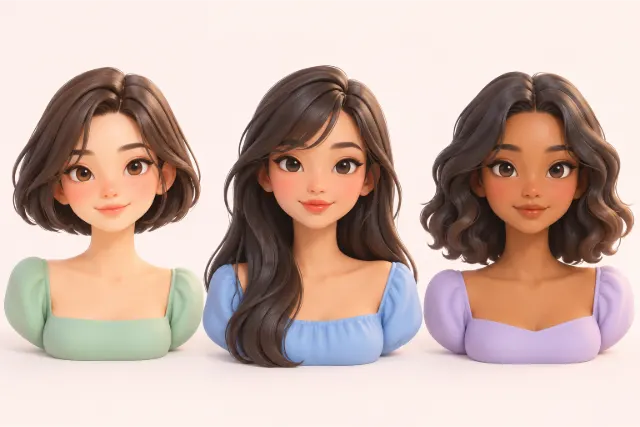
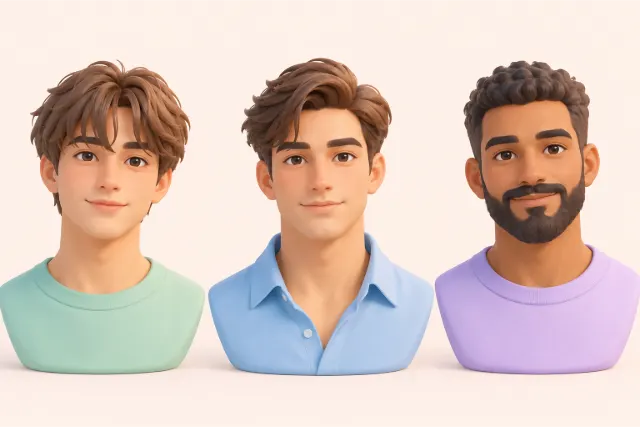
Long hair
- Waves that start at jaw level
- Long hair with side-swept bangs
Medium hair
- A long bob with waves from the jaw down
Short hair
- A chin-length bob
Shorter men’s cuts
- Medium fringe
- Side part with medium length on top
Better avoided: lots of volume on top.
Frames that are lighter at the top balance a wider forehead.
- Bottom-heavy frames add weight below the eyes.
- Oval frames soft and balanced.
- Rimless glasses keep the forehead light.
- Light aviators widen toward the jaw.
Less flattering: heavy, top-heavy frames.
A beard adds width below a narrow chin.
- Fuller at the chin
- A short full beard
Add width at the forehead and the jaw.
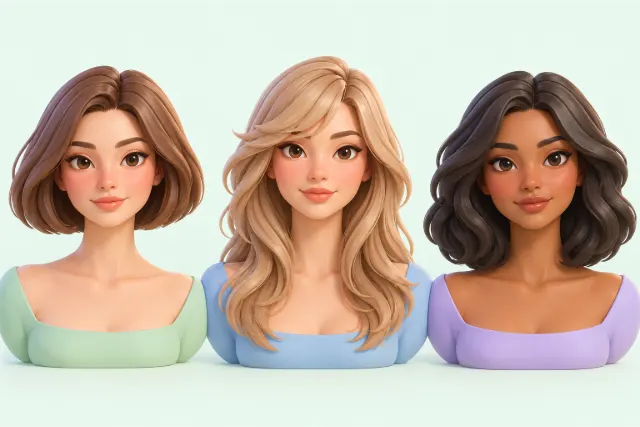
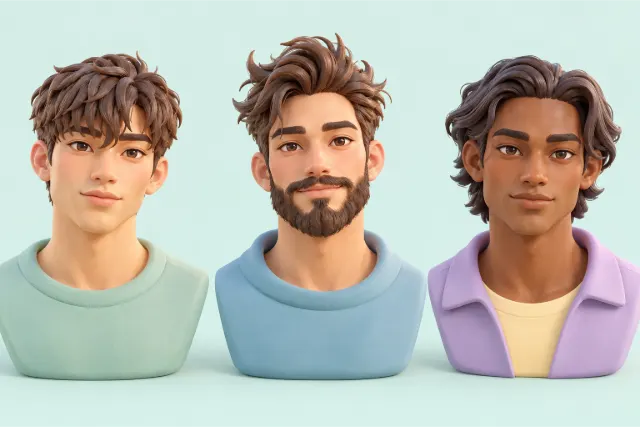
Long hair
- Long layers with side-swept bangs
Medium hair
- A shoulder-length cut with fullness at the jaw
Short hair
- A chin-length bob
Shorter men’s cuts
- Textured fringe
- Messy quiff
Better avoided: hair slicked flat at the sides.
Frames that soften the cheekbones and add width above them.
- Oval frames soft lines over high cheekbones.
- Cat-eye frames widen the upper face.
- Rimless glasses light over the cheekbones.
- Browline frames add width at the brows.
Less flattering: narrow frames that stop at the cheekbones.
A beard fills in a narrow chin.
- A full beard
- A short beard with a fuller chin
Add width at the sides and keep the length in check.
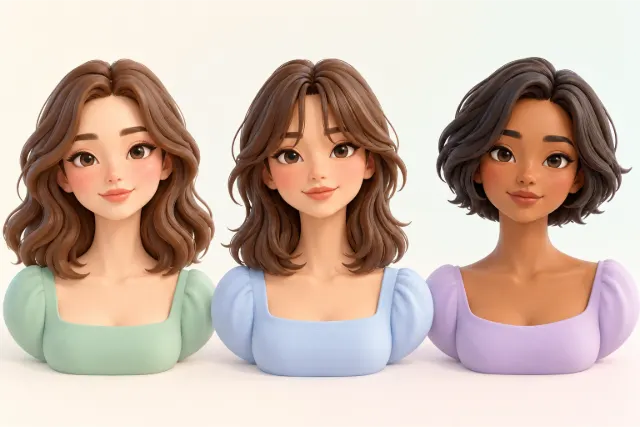
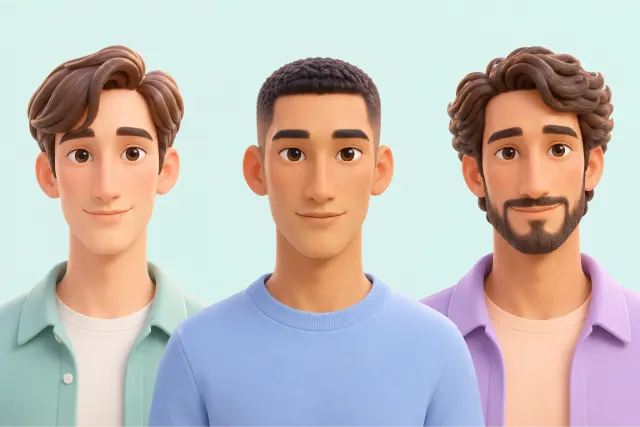
Long hair
- Shoulder-length waves
Medium hair
- Curtain bangs with medium hair
- A layered bob
Short hair
- A short crew cut without height on top
Shorter men’s cuts
- Side part with a fringe
- Short sides kept a little fuller
Better avoided: very long straight hair and height on top.
Deeper frames break up the length of the face.
- Oversized frames cover more of the face.
- Deep frames with tall lenses shorten the face.
Less flattering: small, narrow frames.
A beard can widen a long face.
- Fuller on the sides
- Short at the chin
Add volume at the temples and the crown.
Long hair
- Layers that start above the jaw
Medium hair
- Side-swept bangs with volume on top
Short hair
- A pixie with height on top
Shorter men’s cuts
- Volume on top with shorter sides
Better avoided: fullness at jaw level.
Frames with more weight at the top balance a wider jaw.
- Browline frames strong brows widen the forehead.
- Cat-eye frames lift the eye line.
Less flattering: bottom-heavy frames.
Keep the jaw from looking wider.
- Short and neat
- Stubble or a short, tidy beard
Your photo stays private. It is measured in your browser and never uploaded or stored. The face model (about 18 MB) comes from this website the first time you add a photo.
A face shape is an estimate. Pose, lens and light change the numbers a little, and many faces sit between two shapes. The tool measures proportions only: it does not recognize who you are.
How do I determine my face shape with a calculator?
Measure four distances
Use a mirror and a ruler held flat, or a printed front photo. Measure the forehead, the cheekbones and the jawline straight across, then the face length from hairline to chin.
Choose your jaw type
Angular, soft and rounded, or a pointed chin. This stands in for the jaw angle a photo would measure.
Read the result
Show my face shape compares your ratios with seven shapes and lists ideas for hairstyles, glasses and beards.
Centimeters or inches both work: the face shape calculator only uses the proportions between the numbers.
Which measurement decides which shape?
- Face length ÷ cheekbone width: round and square faces are short for their width, oblong faces clearly long, oval faces in between.
- Forehead and jaw compared with the cheekbones: a wide forehead over a narrow jaw points to heart, a jaw wider than the forehead to triangle, both narrow to diamond.
- Jaw type: clear corners separate square from round.
The result lists your ratios with plain words, so you can see why it chose a shape.
What is my face shape as a man?
The same four measurements apply to men. If you wear a beard, measure the jawline under it: press the ruler gently against the jaw corners rather than measuring the beard. A receding hairline makes the face length hard to judge; measure from where your hairline used to be, roughly where the forehead starts to curve back.
No app needed: your phone’s browser is enough
People often look for a “what is my face shape” app. This page works the same way in the browser of any current phone, with nothing to install. Use the form, or add a selfie: the AI then measures the photo on your phone, and the photo is not uploaded.
The face model loads only when you add a photo. The manual form needs no download at all, so it also works on a slow connection.
Measured by hand or from a photo: which is better?
Both have weak spots. A tape measure that follows the curve of the face gives larger widths than a ruler held straight, and finding your own jaw corners in a mirror takes care. A photo is quick, but the camera angle and the hairline guess change it a little. If both ways give the same shape, you can trust it. If not, read the ideas for both shapes. The photo result also lists its ratios, so you can put them next to your own numbers and see where they differ.
More Face Shape Detector pages
Frequently asked questions
Do I measure around the curve of my face?
No. Measure straight across with a ruler held flat in front of your face, or on a front photo. A tape measure that follows the curve gives larger widths and can change the result.
What if my hairline is receding or hidden?
Measure the face length from where the forehead starts to curve back toward the top of the head. With a photo, move the hairline line until it sits there.
I measured twice and got two different shapes. Why?
Small changes of a few millimeters can move a face between two neighboring shapes, especially between oval and oblong or round and square. Take the average of two careful measurements, and read the ideas for both shapes.
Is there a what is my face shape app?
You do not need one. This page runs in the browser of your phone or computer, with the manual form and the photo option, free and without an account.
Take a break