The short answer
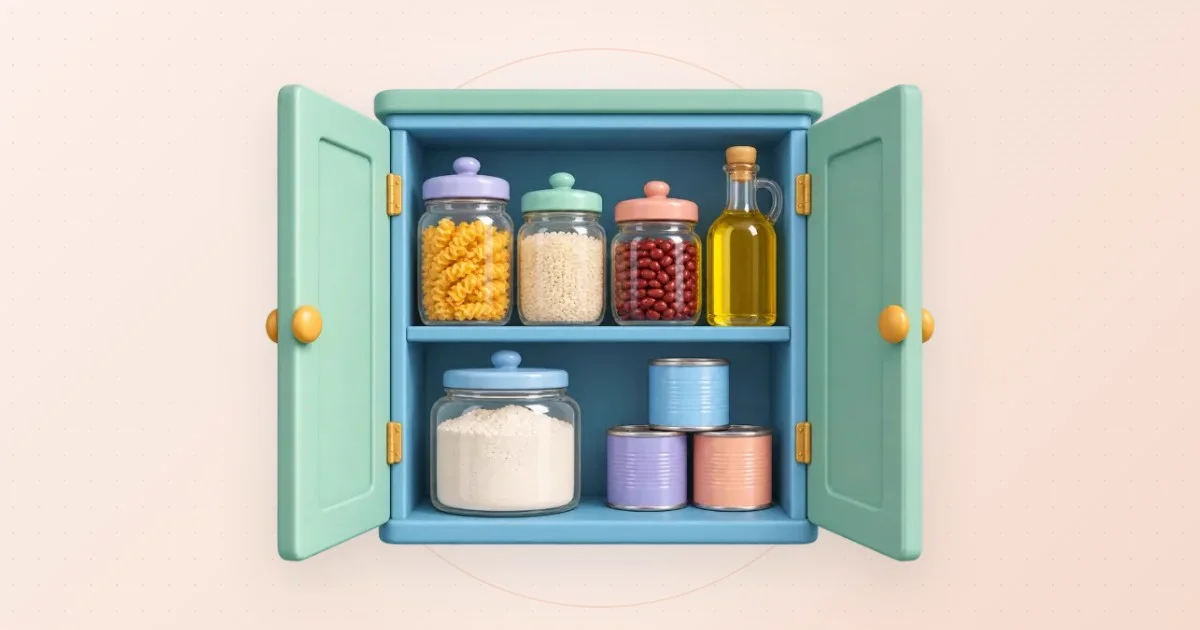
Pantry staples are the long-keeping basics many recipes need: rice, pasta, canned tomatoes and beans, flour, oil, vinegar, salt, pepper, a few spices and sauces, plus some freezer and fridge basics. Start with what you cook most, buy the rest when a recipe calls for it, and use the oldest pack first.
Open the free toolKitchen pantry staples list by category
A kitchen pantry staples list falls into eight groups. You do not need every item; keep the ones your cooking uses and skip the rest.

| Category | Staples | Good for |
|---|---|---|
| Grains and pasta | Rice, pasta in one or two shapes, rolled oats, couscous or quinoa, bread crumbs | Sides, quick dinners, breakfast |
| Canned and jarred | Diced or crushed tomatoes, tomato paste, beans and chickpeas, tuna or salmon, broth, coconut milk, peanut butter | Sauces, soups, chili, curries, sandwiches |
| Baking | All-purpose flour, sugar, brown sugar, baking powder, baking soda, cornstarch, vanilla extract, yeast | Pancakes, quick breads, thickening sauces |
| Oils and vinegars | A neutral oil such as canola, olive oil, white or cider vinegar, a second vinegar such as balsamic or rice vinegar | Frying, roasting, dressings |
| Spices and dried herbs | Salt, black pepper, garlic powder, paprika, cumin, chili powder, oregano, cinnamon, red pepper flakes, bay leaves | Seasoning almost every dish |
| Sauces and condiments | Soy sauce, mustard, ketchup, mayonnaise, hot sauce, honey, salsa | Marinades, dressings, quick flavor |
| Freezer staples | Frozen peas, corn, spinach or mixed vegetables, frozen fruit, bread, a pack of chicken or ground meat | Fast sides, backup dinners |
| Fridge basics | Eggs, milk or a plant-based drink, butter, cheese, plain yogurt, lemons | Breakfasts, baking, sauces |
Essential pantry staples list: start small on a budget
Start with a short essential list that covers many dinners, then add one or two items per shop as recipes call for them. These eight lines are enough for pasta, rice dishes, soups, chili and simple baking:
- Rice and one kind of pasta
- Canned tomatoes and a small can of tomato paste
- Two kinds of canned beans, or a bag of dried lentils
- All-purpose flour and sugar
- One neutral oil and one vinegar
- Salt, black pepper, garlic powder and one spice or blend you like
- Soy sauce or another sauce your household uses often
- A bag of frozen vegetables
How to store pantry staples and rotate them
Store staples in a cool, dry cupboard, in closed or airtight containers, and use the oldest pack first. That habit, first in, first out, keeps food from hiding at the back until it is stale.

- First in, first out: put new packs behind the old ones when you unpack the shopping.
- Grains in airtight containers: the EPA suggests labeling them with the contents and the date.
- Keep food away from household cleaning products and chemicals, as the FDA advises.
- Check cans: the FDA counts swelling, leaks, holes, deep rust and dents bad enough to stop normal stacking or opening as damage. A sticky outside can mean a leak. It says to return newly bought leaking cans to the store and otherwise throw damaged cans away.
- Read dates correctly: the FDA explains that “Best if Used By” is about best flavor and quality. Food past that date may still be safe, but check it for changes in color, consistency or texture.
- Whole-wheat flour goes bad sooner than white flour because the bran and germ add oil, Tufts University’s nutrition letter explains. Buy it in smaller bags or keep it in the freezer.
- Freezer staples: label them with the date. The FDA says food kept at 0 °F stays safe; quality slowly drops the longer it stays frozen.
Asian, Mediterranean, Mexican and Eastern European pantry staples
Pantry staples change with the food you cook. These are common starting points for four broad kitchens, not complete lists; each covers many regions and family traditions.
| Kitchen | Common staples | Used in, for example |
|---|---|---|
| Asian (Chinese, Japanese, Korean, Thai, Vietnamese and more) | Jasmine or short-grain rice, rice or wheat noodles, soy sauce, rice vinegar, toasted sesame oil, fish sauce, oyster sauce, a chili paste such as gochujang or sambal, miso, coconut milk | Stir-fries, fried rice, noodle soups, curries |
| Mediterranean | Olive oil, canned tomatoes, chickpeas, lentils, bulgur or couscous, dried oregano, capers, olives, tahini, red wine vinegar | Pasta, salads, hummus, stews |
| Mexican | Black and pinto beans, rice, corn tortillas or masa harina, dried chiles such as ancho, chipotles in adobo, cumin, Mexican oregano, salsa | Tacos, enchiladas, beans and rice, soups |
| Eastern European | Buckwheat, rolled oats, sunflower oil, sauerkraut, pickles, jarred beets, dried dill, sweet paprika, bay leaves, dried mushrooms | Borscht, kasha, stews, dumplings |
Food pantry staples list: what food banks usually ask for
Food banks usually ask for shelf-stable staples that keep well and travel safely. Feeding America lists peanut butter, canned soup, canned fruit and vegetables, canned stew, canned fish, canned beans, pasta and rice among the most needed foods, and notes that many food banks prefer whole-grain pasta and brown rice.
The same article says food banks decline glass containers, dented or bloated cans, opened packages and food past its date. Rules differ, so check with your local food bank before you collect; a money donation is another option.
Pantry staples list PDF: print it or keep it on your phone
There is no pantry staples list PDF to download here. To get one on paper, print this page; many browsers can also save it as a PDF from the print dialog. If you prefer a list you fill in yourself, Planner Studio’s printable grocery list template has aisles, amounts and checkboxes. On a phone, the Meal Planner keeps your staples in its “Pantry” view.
Mark your staples in the Meal Planner’s Pantry
The Meal Planner’s “Pantry” holds the things you always have at home, so they never clutter your shopping list. It is free, needs no account and keeps your lists on your device.
Open the Pantry
Open “Pantry” and tick the suggestions you keep at home, such as salt, pepper, oil, flour, sugar or rice, or type your own.
Build a list
Open “Shopping list”. Items from your planned meals or added with “+ Add item” appear by aisle, and pantry items move to the “Already at home” group instead.
Bring one back when it runs low
Running out of rice? Bring it back from “Already at home” for this list. Tap “I have it” for anything else you find at home, then “Share” the list.
Questions you might still have
What are the most basic pantry staples?
Rice or pasta, canned tomatoes, canned beans, flour, oil, salt and pepper cover many dinners. Add one or two sauces and a few spices you actually use.
Is there a pantry staples list PDF?
Not as a download. Print this page or save it as a PDF from your browser’s print dialog, or keep your staples in the Meal Planner’s “Pantry” view.
How long do pantry staples last?
It depends on the item, so check the date on each pack. The FDA describes “Best if Used By” as a date for best flavor and quality. Throw away cans that are swollen, leaking, deeply rusted or badly dented.
Do spices go bad?
Dried spices slowly lose aroma and color, which is a quality question. Check the date and smell a pinch: if it smells faint, the dish will taste faint too. Buy small jars of spices you rarely use.
What should be on an Asian pantry staples list?
Rice, soy sauce, rice vinegar and toasted sesame oil cover many dishes. Add fish sauce, oyster sauce, a chili paste, miso or noodles for the cuisines you cook most.
How do I keep staples off my shopping list?
Mark them in the Meal Planner’s “Pantry”. They then stay in the “Already at home” group of every shopping list until you bring one back.
Sources & useful details
- U.S. Food and Drug Administration: Are You Storing Food Safely? (content current as of 18 January 2023; can damage, food away from cleaning products, freezer at 0 °F); checked 2026-10-27
- U.S. Food and Drug Administration: Tips to Reduce Food Waste (“Best if Used By” means best flavor and quality); checked 2026-10-27
- U.S. Food and Drug Administration: Refrigerator & Freezer Storage Chart (March 2018; freezing at 0 °F keeps food safe, times for quality only); checked 2026-10-27
- U.S. Environmental Protection Agency: Preventing Wasted Food at Home (grains in labeled airtight containers, onions and potatoes in a cool dark place, bulk buys); checked 2026-10-27
- Tufts Health & Nutrition Letter: Does whole-wheat flour go bad more quickly than all-purpose flour? (updated 2019); checked 2026-10-27
- Feeding America: What to donate to a food bank and what to avoid (January 2020); checked 2026-10-27
- LoschaZ Meal Planner: shopping list with pantry check in your browser
- LoschaZ guide: how to meal plan for the week and shop once
- LoschaZ guide: basic grocery list by aisle
- LoschaZ guide: meal plan for a family of 4
- LoschaZ Planner Studio: printable grocery list template
These guides are written from the current LoschaZ tools and the sources listed above. Examples are illustrations, not tests on every device or promises of an identical result.